
Plan the load before choosing the vehicle
Provide each unit’s dimensions and weight, total consignment weight, stackability and any loading order. If goods need side loading, rear loading or specialist restraint, describe that requirement.
Do not select a vehicle solely from its name. Payload, internal dimensions and handling equipment must all fit the consignment. The team will confirm suitability and availability before a booking.
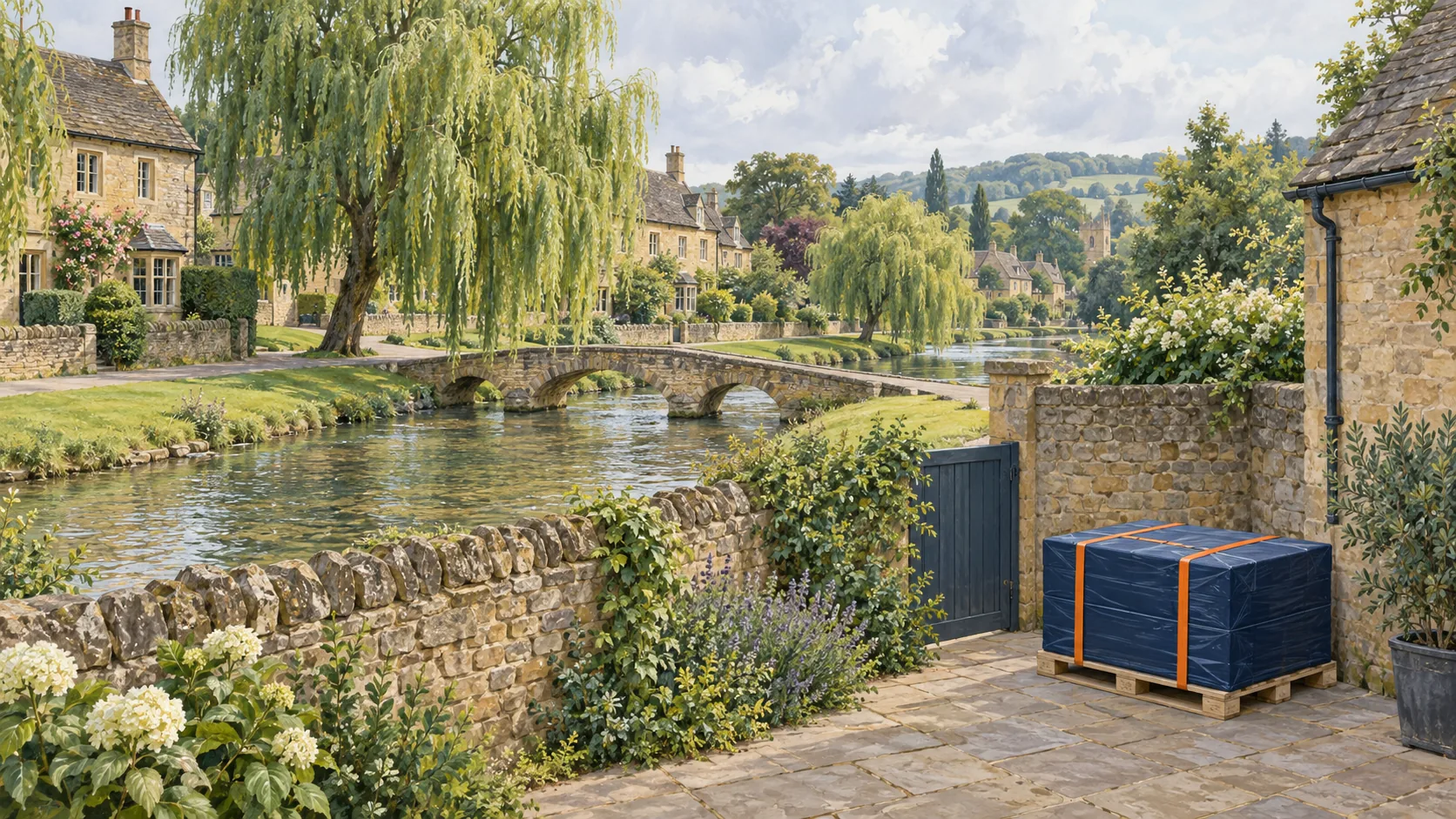
Plan full-load freight at your Bourton-on-the-Water address
For a pallet, crate or heavy parcel in Bourton-on-the-Water, identify usable space at the goods entrance and the surface on which the load will be handled. A public car park or pedestrian route should not be assumed suitable for unloading equipment.
Measure the goods as they will travel, including the base and wrapping. Loading and unloading are separate arrangements; confirm the people, equipment and space available at both addresses.
- For full-load freight, prepare: total load and unit counts; loading method and sequence; receiving appointment.
- Name the exact receiving premises and loading entrance, then agree who will meet the vehicle. Visitor parking, pedestrian routes and the goods handover are separate parts of the plan.
Coordinate the two sites
Provide opening hours and any appointment or security requirements at both sites. Explain which party supplies the forklift, lifting equipment and people for each handover.
Flag delays that depend on a seller release, production run or site contact. Waiting, rescheduling and additional stops must be agreed as part of the quote.
Your Bourton-on-the-Water enquiry checklist
- The full Bourton-on-the-Water address and receiving door
- A lawful loading position agreed for the vehicle
- The recipient’s handover window, including busy periods
- For full-load freight, include total load and unit counts; loading method and sequence; receiving appointment.
- Confirm the supplier, total price, handling scope and booking terms before accepting a quote.